What Makes Glock a Striker-Fired Pistol?
You’ll find no external hammer on a Glock because it uses a striker-fired system, which is a key feature of this popular pistol design. When you rack the slide, it partially cocks an internal striker by compressing its spring, getting the gun ready to fire.
This setup means the Glock is simpler inside compared to hammer-fired pistols.
Pulling the trigger fully releases this striker to ignite the cartridge, giving you a consistent, controlled trigger pull every time. There are no extra safeties to worry about, which makes shooting smoother and more straightforward.
This streamlined design really boosts reliability, durability, and ease of use. Keep exploring, and you’ll see how these features all come together to enhance the Glock’s overall performance.
Key Takeaways
- Glock pistols use an internal striker instead of an external hammer for firing. Racking the slide partially cocks the striker and compresses its spring.
- When you pull the trigger, it releases the striker to strike the firing pin and ignite the cartridge. The enclosed striker design does away with external safeties and keeps the pistol’s profile sleek.
- Plus, having fewer internal parts means the trigger pull stays consistent. It also boosts reliability and makes maintenance easier.
How Glock’s Striker-Fired Mechanism Actually Works
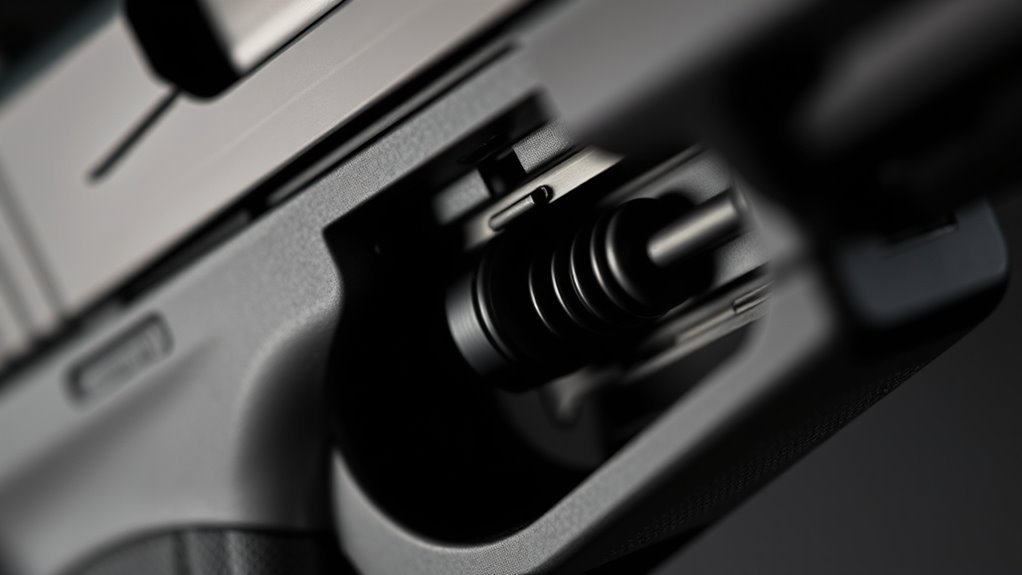
Although Glock pistols don’t have an external hammer, their striker-fired mechanism guarantees reliable firing by partially cocking the internal striker when you rack the slide. This slide racking action compresses the striker spring, leaving the internal striker partially cocked and ready.
Glock’s striker-fired system ensures readiness by partially cocking the internal striker with each slide rack.
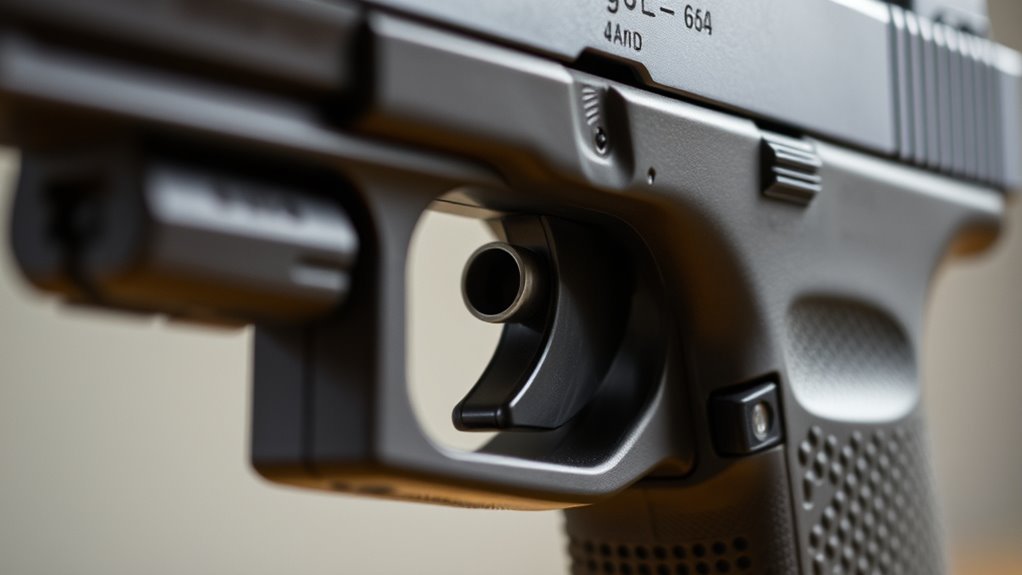
When you pull the trigger, the trigger safety tab must be depressed first, ensuring the trigger can only move intentionally. Pressing the trigger releases the striker release, allowing the internal striker to fully move forward and strike the firing pin, igniting the cartridge.
Because the striker is enclosed within the slide, the action remains streamlined and protected. This design produces a consistent trigger pull that’s short and uniform, enhancing control.
The enclosed action and striker-fired mechanism work together to deliver dependable, precise firing every time.
The Benefits of Glock’s Striker-Fired Simplicity and Reliability
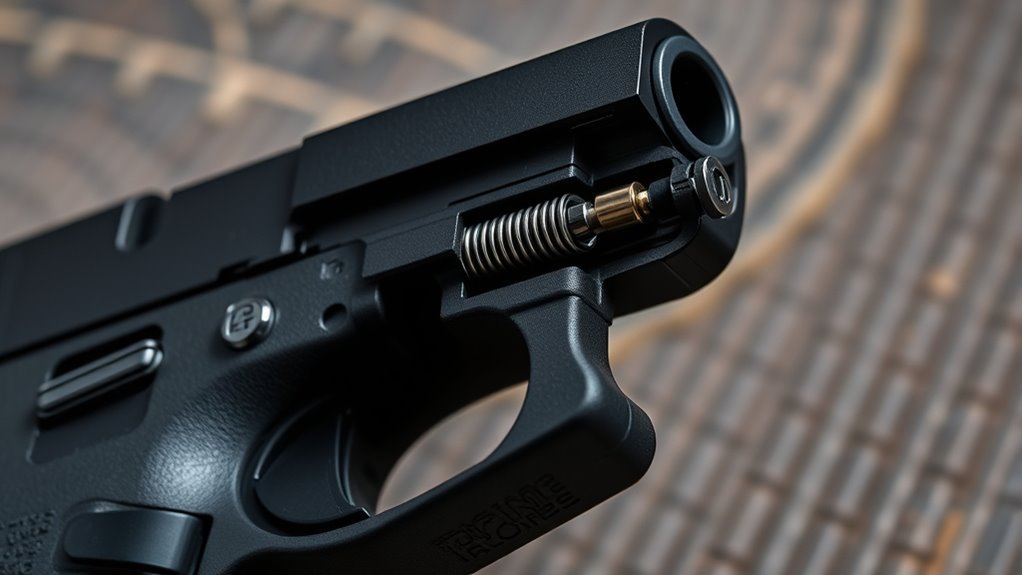
Understanding how Glock’s striker-fired mechanism works gives you insight into why its simplicity and reliability stand out. Glock’s striker-fired design eliminates the external hammer, resulting in a simplified design with fewer parts.
This streamlined internal striker system delivers a consistent trigger pull, improving both accuracy and reliability. You’ll appreciate how Glock’s internal safety features replace external safeties, reducing accidental discharge risks without complicating operation.
The reduced number of components enhances durability, meaning your Glock can handle heavy use without frequent repairs. Maintenance is straightforward too—easy disassembly and fewer parts make upkeep quick and hassle-free.
Frequently Asked Questions
Are All GLOCK Pistols Striker Fired?
Yes, all Glock pistols are striker-fired. You’ll find they use an internal striker instead of an external hammer, giving you a consistent trigger pull and reliable, simple operation every time you handle one.
What Are the Downsides of Using a Striker-Fired Pistol?
You might find striker-fired triggers a bit soft or less crisp, which can challenge your precision. Without external safeties or a visible hammer, you’ll need extra caution to avoid surprises and guarantee safe handling every time.
Which Is Better, a Hammer-Fired or a Striker Fired Pistol?
Choosing between hammer-fired and striker-fired pistols depends on your preference for trigger feel, safety features, and handling. You’ll appreciate striker-fired for simplicity and speed, while hammer-fired offers more tactile control and manual safeties.
What Pistols Are Not Striker Fired?
You won’t find striker-fired mechanisms in pistols like the Colt 1911, Browning Hi-Power, or revolvers such as the Smith & Wesson Model 686. They use hammers and different firing actions, giving you manual control.
Conclusion
When you pick up a Glock, you’re not just holding a pistol—you’re feeling the power of precision engineering. Its striker-fired mechanism isn’t just a design choice; it’s a promise of reliability and simplicity every time you pull the trigger.
But here’s the secret: understanding how it works changes everything. Once you know what’s behind that smooth, consistent pull, you’ll never see a striker-fired pistol the same way again.
Glock’s striker-fired design means fewer moving parts and a more straightforward firing system compared to traditional hammer-fired pistols. This simplicity leads to enhanced reliability and easier maintenance, which is why many shooters trust Glock for personal defense, law enforcement, and competitive shooting.
So, when you think about what makes Glock a striker-fired pistol, remember it’s all about the consistent trigger pull, the dependable striker mechanism, and the overall reliability that sets it apart. That knowledge changes how you appreciate every shot you take.