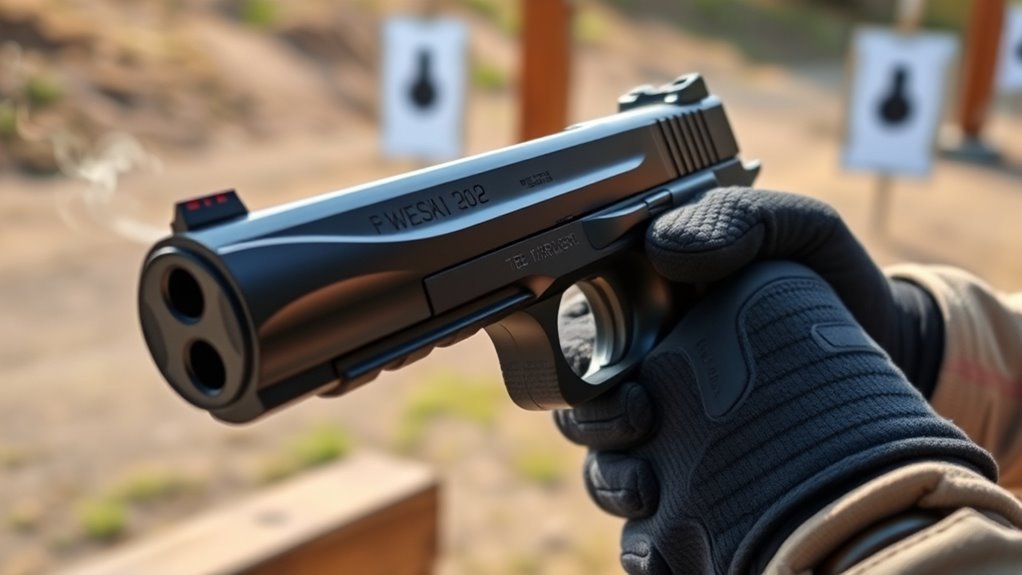
What Does a Compensator Do on a Pistol and How to Use It
A compensator on your pistol redirects gases upward, cutting down muzzle rise and recoil so you can stay on target faster and shoot more accurately. This handy accessory improves control during rapid fire and helps you get quicker follow-up shots.
If you’re looking to boost your shooting performance, understanding how a compensator works is key.
You’ll notice better control when firing multiple rounds, but keep in mind it does amplify noise and blast. To use it effectively, make sure you maintain a firm grip and that the compensator is properly installed.
Don’t forget to wear hearing protection because of the increased noise levels.
Keep practicing with your compensator, and you’ll discover practical tips to maximize both its performance and your comfort while shooting. It’s all about getting the most out of your pistol with this simple upgrade.
How a Compensator Affects Pistol Performance
Although a compensator adds some noise and blast, it greatly improves your pistol’s performance by redirecting gases upward and to the sides to counteract muzzle rise. This muzzle device actively controls muzzle movement, pushing muzzle gases in a way that reduces both muzzle flip and felt recoil.
By managing these forces, the compensator provides effective recoil mitigation, helping you keep the barrel level during rapid fire. This means you can reacquire targets faster and make more accurate follow-up shots.
The design and size of the compensator’s ports dictate how well it directs gases upward, balancing recoil control with increased muzzle blast and noise. Overall, a well-designed compensator sharpens your shooting experience by minimizing unwanted muzzle rise and movement without compromising control.
Practical Tips for Using a Pistol Compensator
Using a compensator changes how your pistol handles, so you’ll want to adjust your grip and stance to maintain control. Since the compensator adds ports that direct gas upward, it reduces muzzle rise by counteracting the recoil impulse.
As gas escapes upward, it counters the upward motion usually caused by recoil and muzzle rise, helping you stay on target—especially useful when using red dots. Make sure your compensator is securely threaded and regularly cleaned to prevent carbon buildup that could affect performance.
Be mindful that the increased gas upward also means more noise and blast, so wear protective gear. Finally, check that your holster fits the compensator’s added length, particularly if you carry pistols daily, to ensure safe, reliable use.
Conclusion
A compensator improves your shooting by reducing recoil, controlling muzzle rise, and helping you stay on target. To get the most from it, focus on proper grip, steady stance, and smooth follow-through.
Remember, a compensator doesn’t replace skill—it enhances it. Practice regularly, adjust your technique, and stay consistent.
By managing recoil, maintaining accuracy, and building confidence, you’ll turn your pistol into a more effective and enjoyable shooting tool every time you take aim. Using a compensator on your pistol can really change the game, making each shot smoother and more controlled. So keep practicing, stay patient, and watch your shooting skills improve with every session.