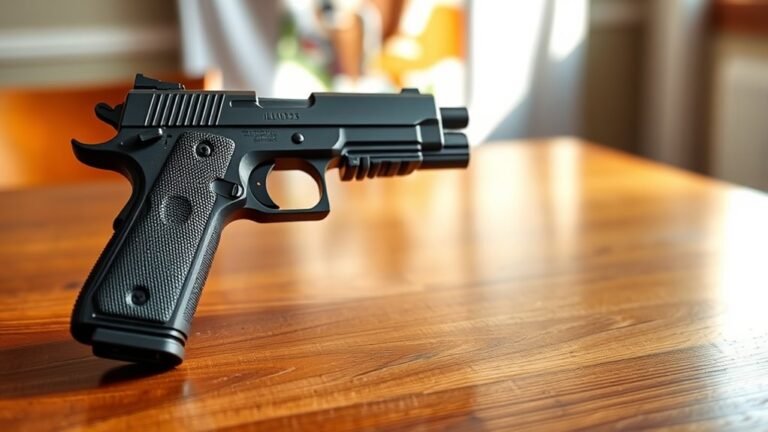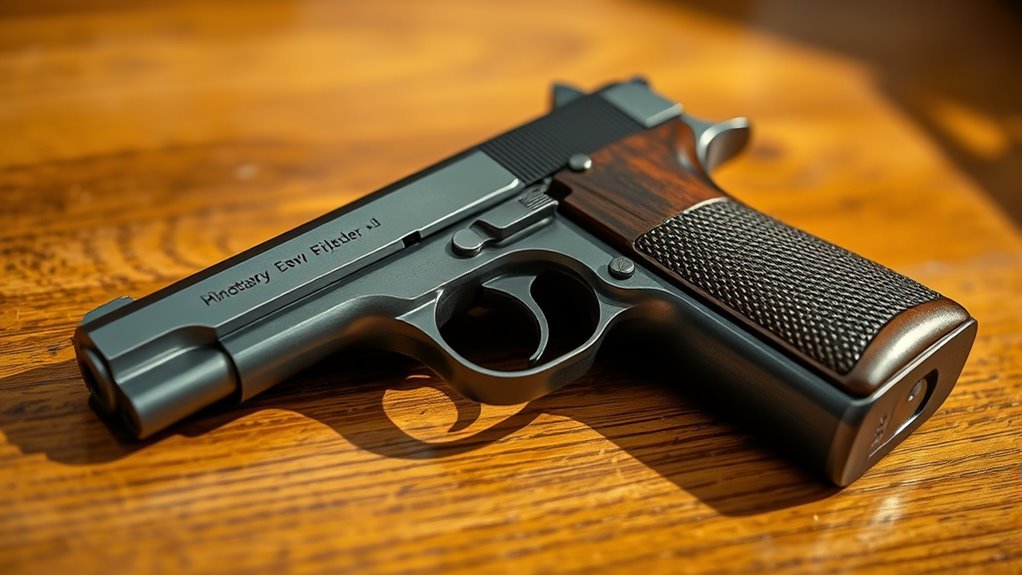
How to Identify the First Semi-Automatic Pistol
You can identify the first semi-automatic pistols by spotting their bulky metal frames and distinctive toggle-lock or blowback mechanisms. These early designs set the foundation for modern handguns, so recognizing their unique features is pretty interesting.
Look for simple external safety levers and visible patent markings from the 1890s.
Compared to today’s pistols, these early firearms have limited ergonomic features and often use cartridges like the 7.63mm Mauser. They usually have minimal decorative elements, which makes them stand out in a collection.
If you want to understand more about how these classic designs differ from modern pistols, there’s a lot more to explore. It’s a fascinating journey into firearm history!
Key Takeaways
- Look for a toggle-lock mechanism, like the distinctive external toggle link you see on early models such as the Mauser C96.
- You’ll often notice a bulky, heavy design with visible external safety levers. Plus, these pistols have minimal ergonomic features compared to modern guns.
- Check for early cartridge calibers, such as 7.63mm Mauser or .32 ACP, usually stamped right on the firearm.
- The finish tends to be simple and utilitarian metal, with very few decorative elements. You’ll also spot basic manufacturing marks dating back to the 1890s.
- Lastly, notice the limited magazine capacity, typically around 7-8 rounds, and manual safety mechanisms. These features really set them apart from today’s semi-automatic pistol designs.
How to Spot the First Semi-Automatic Pistols
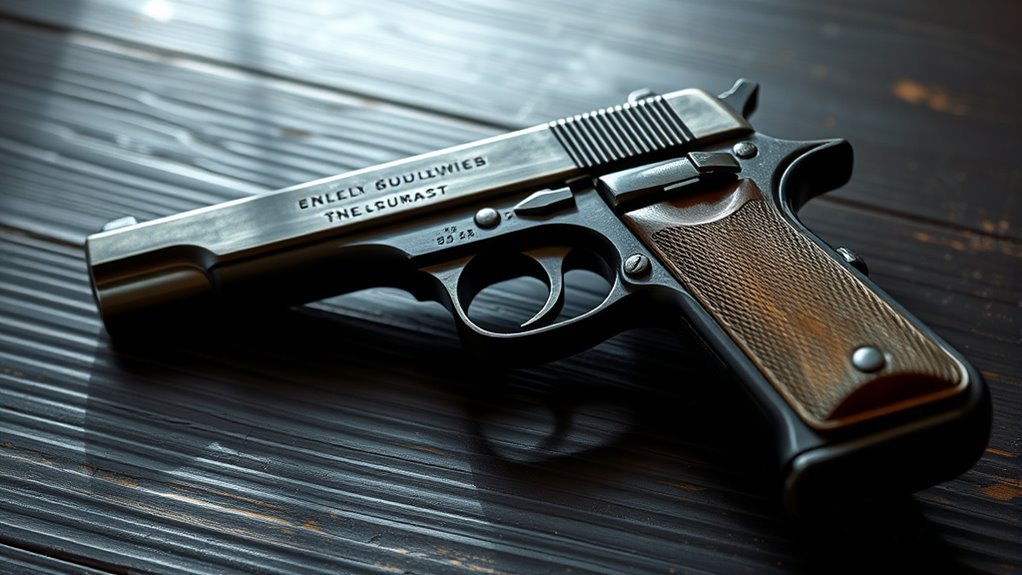
How can you tell if a pistol is one of the earliest semi-automatic models? Start by looking for distinctive mechanisms like toggle-lock or blowback systems, common in early models such as the Mauser C96.
These semi-automatic pistols often have a bulky design with visible external components, including an external safety and exposed toggle links. Check the calibers too; many first-generation pistols use cartridges like 7.63mm Mauser or .32 ACP.
Patent markings or manufacturer names from the 1890s can also help you identify these early firearms. Unlike modern pistols, these have simple, utilitarian finishes and lack ergonomic refinements.
Recognizing these features will guide you in spotting the pioneering semi-automatic pistols that shaped firearm history.
Key Features That Set Early Semi-Automatic Pistols Apart
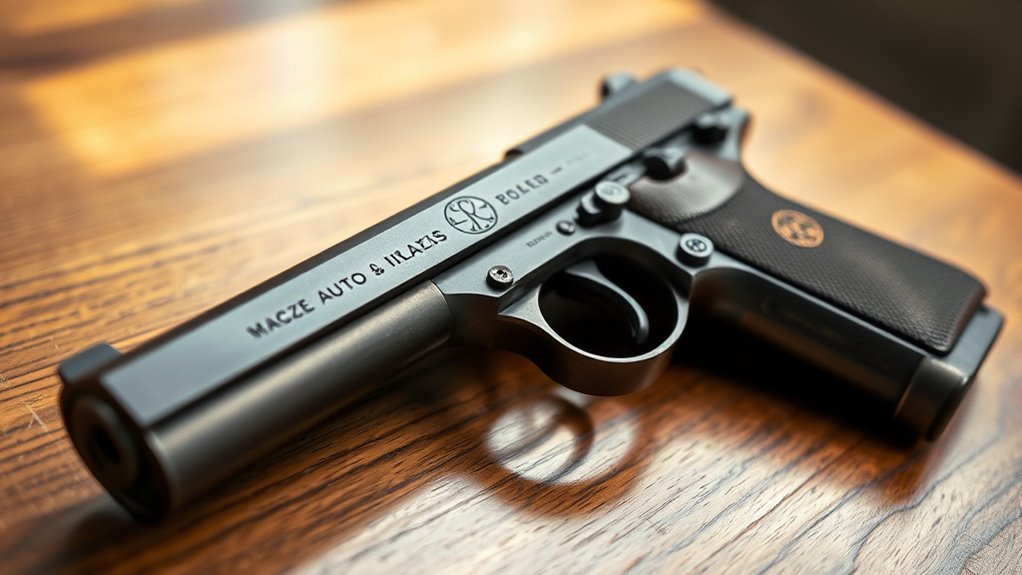
Recognizing early semi-automatic pistols means understanding what sets them apart from modern designs. You’ll notice early designs favored metal frames with basic ergonomics. They used toggle-lock or blowback mechanisms, making them heavier and bulkier.
Safety features were minimal, often limited to manual safety levers. Magazine capacity was usually capped at 7 to 8 rounds. Many lacked serial numbers or detailed markings, reflecting simpler manufacturing.
| Feature | Early Semi-Automatic | Modern Pistols |
|---|---|---|
| Mechanism | Toggle-lock or blowback | Recoil-operated |
| Safety Features | Manual safety, simple design | Advanced safeties, sensors |
| Magazine Capacity | 7-8 rounds | 15+ rounds |
| Ergonomics | Basic metal frame | Ergonomic polymer frames |
Understanding these traits helps you identify genuine early semi-automatic pistols quickly. It’s pretty handy once you get the hang of it!
Frequently Asked Questions
What Was the Very First Semi-Automatic Pistol?
The very first semi-automatic pistol was the Borchardt C-93, introduced in 1893. You’ll notice its unique toggle-lock mechanism, which set it apart and paved the way for future semi-automatic pistol designs.
What Does “Mexican Carry” Mean?
You carry without a holster, you tuck your gun inside your waistband or pocket—that’s what “Mexican carry” means. You get quick access, but you also risk accidental discharge and theft, so use caution every time.
How Do I Identify What Gun I Have?
You can identify your gun by checking for model or serial numbers on the frame or slide. Look for manufacturer markings, examine design features, note caliber stamps, and then consult online databases or firearm guides for details.
Was the 1911 the First Semi-Auto Pistol?
No, the 1911 wasn’t the first semi-auto pistol. Picture a Borchardt C-93, sleek and pioneering from 1893, blazing trails before the 1911’s legendary design even took shape in the early 1900s.
Conclusion
If you think spotting the first semi-automatic pistol is tricky, it’s funny how those early designs share features you see in modern guns—like a slide and magazine.
You might not expect such old models to feel so familiar, but that’s exactly what makes identifying them enjoyable.
Once you know what to look for, you’ll notice these pioneers aren’t so different after all—just the clever beginnings of what we use today.
Recognizing the first semi-automatic pistol means paying attention to key features like the presence of a slide mechanism and a detachable magazine, which are common in today’s firearms. These early designs laid the foundation for modern pistols, blending innovation with practicality. So, whether you’re a collector, enthusiast, or just curious, understanding these elements makes it easier to identify the historic semi-automatic pistols that shaped firearm history.