How to Identify If an ARP Is a Pistol
You can identify if your ARP is a pistol by checking a few key features. First, measure the barrel length—it must be under 16 inches. Then, verify the overall length from barrel end to buffer tube or stabilizing brace is under 26 inches.
Next, confirm it has a pistol brace or bare buffer tube instead of a shoulder stock. Having a shoulder stock would reclassify it as a Short-Barreled Rifle (SBR).
Keep these details in mind to stay compliant and understand how the rules apply.
Knowing these simple steps helps you avoid legal issues while enjoying your ARP pistol safely.
Key Takeaways
- Measure the overall length from barrel end to buffer tube or brace, making sure it’s under 26 inches.
- Check that the barrel length is less than 16 inches, measured from the breech face to the muzzle.
- Look for a pistol stabilizing brace or just a bare buffer tube instead of a shoulder stock.
- Remember, if there’s a shoulder stock attached, it’s no longer a pistol—it becomes a short-barreled rifle (SBR).
- Be sure to document all your measurements and features carefully. This helps confirm the firearm’s legal classification and avoids any misidentification.
Understanding AR Pistols and How to Measure Them
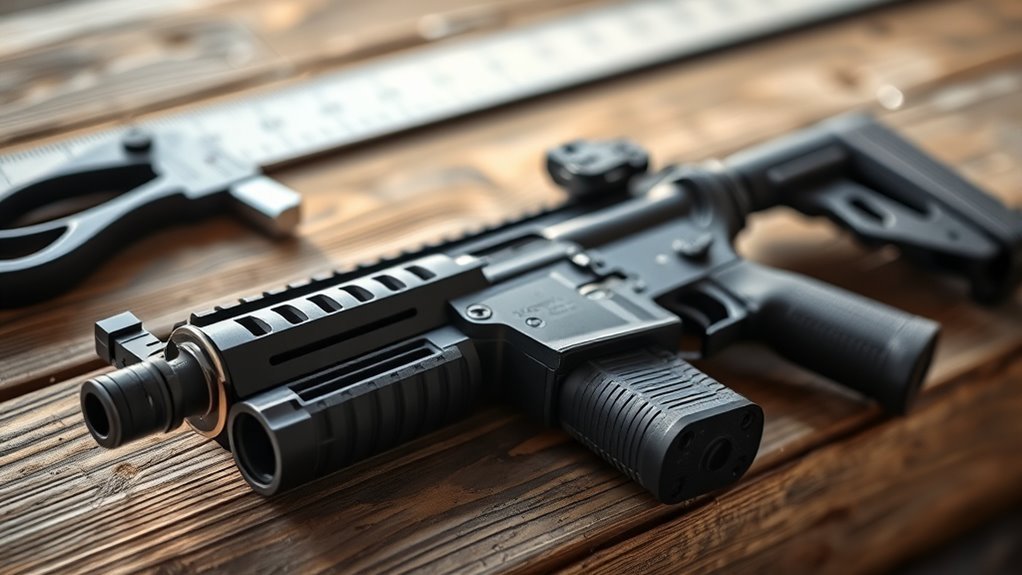
When you’re trying to identify if an AR is a pistol, you need to focus on its measurements and configuration. The overall length must be under 26 inches, measured from the end of the barrel to the end of the buffer tube or pistol brace.
The barrel length, measured from the breech face to the muzzle, should be less than 16 inches, qualifying it as a short barrel. Key to firearm classification is the presence of a stabilizing brace or bare buffer tube instead of a shoulder stock.
This setup allows the AR to be held in one hand, distinguishing it from rifles. Proper legal measurement ensures your AR qualifies as a pistol, relying on barrel length, overall length, and the use of a pistol brace rather than a stock.
Legal Criteria That Distinguish AR Pistols From Short-Barreled Rifles
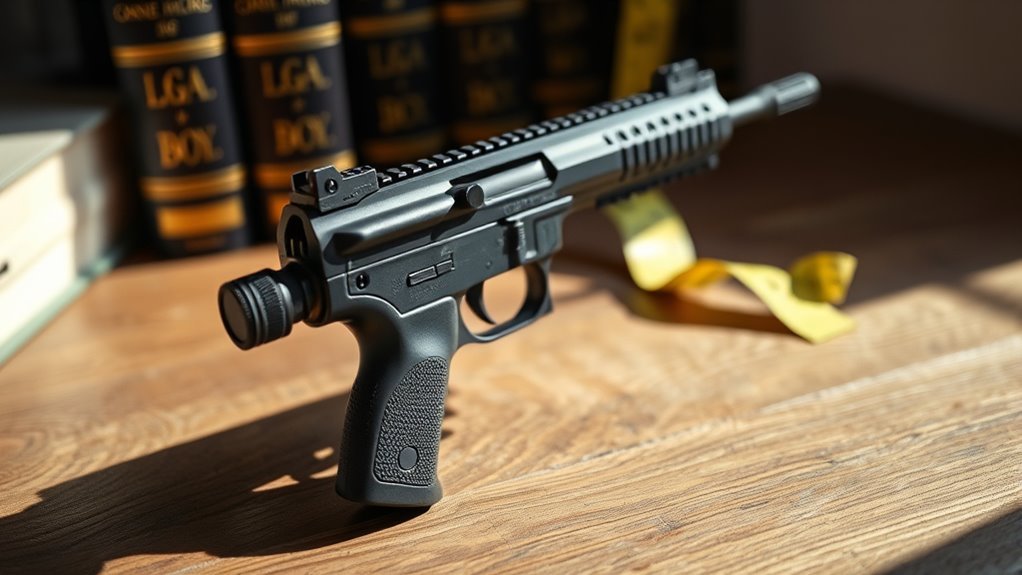
To legally distinguish an AR pistol from a short-barreled rifle, you need to pay close attention to specific measurements and features. An AR pistol must have a barrel length under 16 inches and an overall length under 26 inches, measured from barrel end to grip tip.
Key measurements distinguish an AR pistol from a short-barreled rifle: barrel under 16 inches, overall length under 26 inches.
Significantly, it cannot have a shoulder stock; instead, it uses a pistol brace or bare buffer tube. Attaching a shoulder stock changes its legal classification to a Short-Barreled Rifle (SBR).
These classification criteria rely on precise firearm measurements and weapon design details. To verify your AR pistol remains legally classified, document these measurements carefully and confirm the absence of a shoulder stock.
Understanding these legal distinctions helps you avoid misclassification and potential legal issues. So, it’s definitely worth taking the time to get it right.
Frequently Asked Questions
What Classifies an ARP as a Pistol?
An ARP is classified as a pistol if it has a barrel under 16 inches, an overall length below 26 inches, and uses a pistol brace or bare buffer tube instead of a shoulder stock, following ATF regulations.
What Determines if an AR Is a Pistol?
You’ll find an AR is a pistol if its barrel’s under 16 inches and total length stays below 26 inches, with no shoulder stock attached. Coincidentally, these limits shape how you legally classify and handle it.
Is a 4 Inch ARP Considered a Pistol?
Yes, your 4-inch ARP is considered a pistol if its overall length is under 26 inches and it lacks a shoulder stock. Adding a stock or brace would reclassify it as a Short-Barreled Rifle.
What Does a Legal AR Pistol Look Like?
You know what they say, “Don’t judge a book by its cover.” A legal AR pistol has a short barrel, no shoulder stock, and a pistol brace, keeping overall length under 26 inches for easy one-handed use.
Conclusion
Now that you know how to identify an AR pistol, you’ll see it’s all about barrel length and overall design. Remember, AR pistols typically have barrels under 16 inches and no stock. This is what distinguishes them from short-barreled rifles.
Notably, nearly 40% of AR-style firearms sold in recent years are pistols. This highlights their growing popularity for compact use and ease of handling.
By understanding these key differences, you can confidently recognize and categorize your firearm correctly. Knowing the barrel length, absence of a stock, and overall design helps you identify an AR pistol quickly. This knowledge is essential for anyone interested in firearm classification or compliance. So, keep these points in mind whenever you come across an AR-style firearm.