How to Identify a Bull Barrel on a Pistol
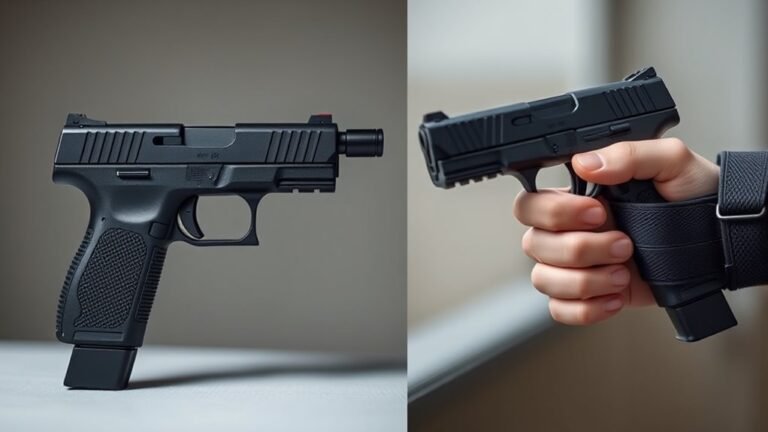
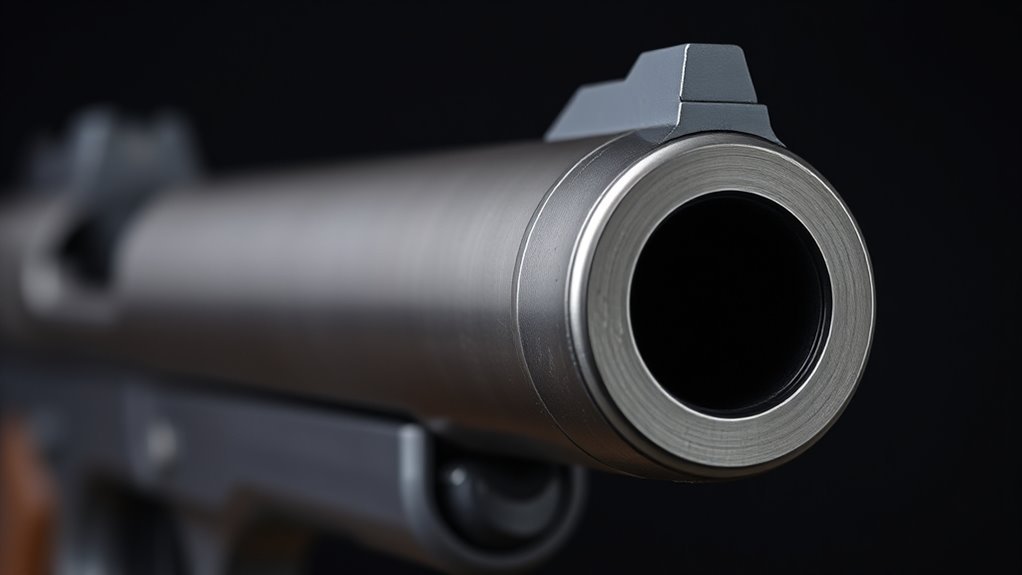
You can identify a bull barrel on your pistol by looking for a thick, solid barrel that keeps a uniform diameter from the chamber to the muzzle, usually between 0.700 and 0.750 inches.
This type of barrel is quite different from standard barrels because it doesn’t taper or get thinner along its length.
Often, bull barrels may have fluting—those grooves cut into the barrel—to reduce weight without sacrificing strength.
The main idea behind this design is to boost stability and accuracy by reducing barrel vibration.
So, when you’re checking out a pistol, seeing this thick, straight barrel is a good sign you’re dealing with a bull barrel.
Keep exploring to discover why bull barrels are prized for performance and durability.
They really make a difference when precision and lasting quality matter.
Key Takeaways
- A bull barrel has a uniform, thick diameter from chamber to muzzle without tapering or narrowing along its length. It typically measures between 0.700 and 0.750 inches in diameter, noticeably thicker than standard barrels.
- The barrel profile is solid and cylindrical, often matching the slide diameter. It may include fluting for weight reduction, which is pretty handy.
- Bull barrels lack or have minimal barrel bushings, contributing to enhanced rigidity and stability. This design choice really helps with accuracy.
- Speaking of accuracy, their design improves it by reducing vibration and managing heat better. Plus, they shift the firearm’s balance forward, making it easier to handle.
How to Identify a Bull Barrel on Your Pistol
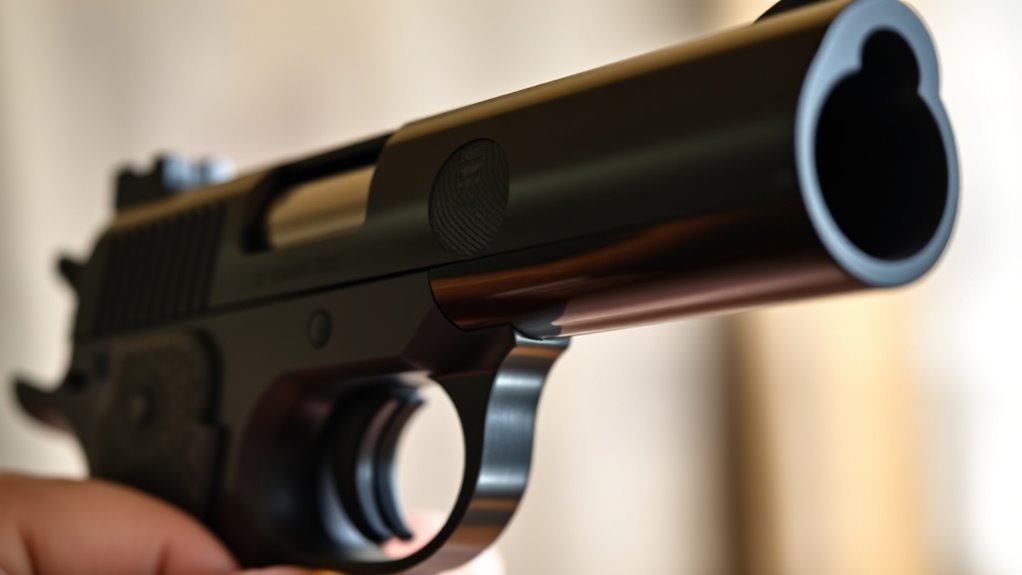
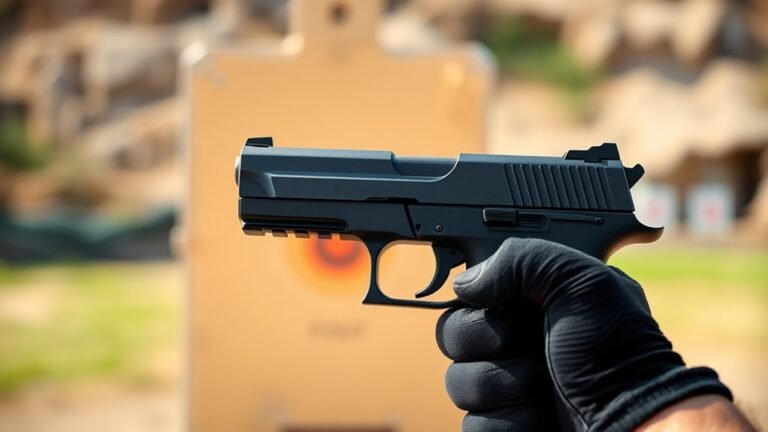
When you want to identify a bull barrel on your pistol, start by examining the barrel’s diameter and profile. A bull barrel features a large, uniform diameter that runs straight from chamber to muzzle without tapering.
Check if the barrel lacks a barrel bushing or has a thick, cylindrical profile often matching the slide’s diameter. This design is common in competition or custom pistols.
Measure the barrel’s diameter at the muzzle—it typically ranges from 0.700 to 0.750 inches, noticeably thicker than standard barrels. Also, look for a consistent, straight profile without any step-downs or narrowing sections.
Some bull barrels have visible thickness at the front or include fluting to reduce weight. This solid construction helps reduce felt recoil, giving you a more stable shooting experience.
Why Bull Barrels Matter: Benefits and Differences
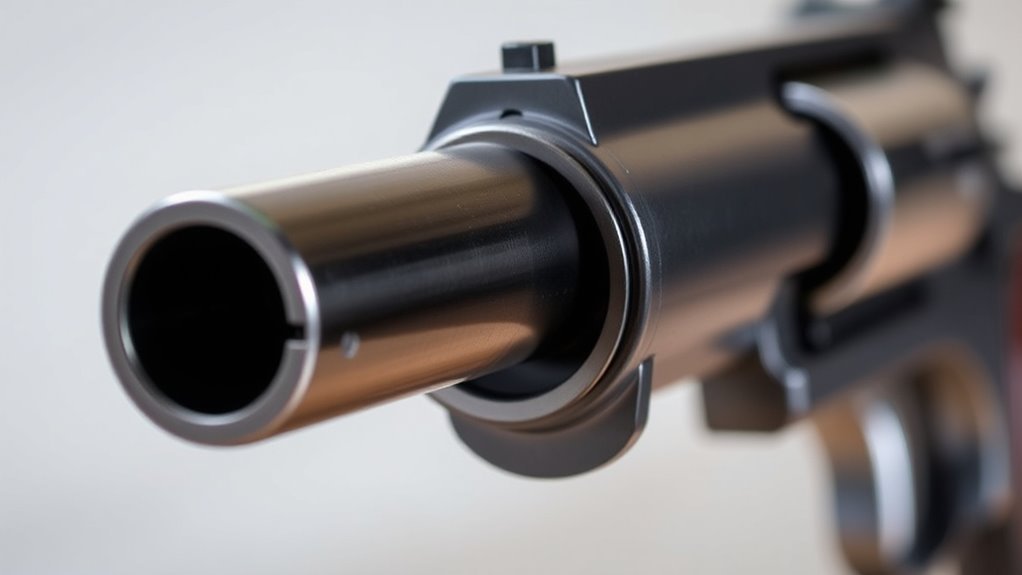
Although bull barrels might add some extra weight to your pistol, they bring some pretty significant benefits that can really enhance your shooting experience.
Bull barrels, also called heavy barrels, keep the same diameter all the way along their length. This gives them increased rigidity and helps with better heat dissipation.
This design cuts down on barrel vibration and shifts the balance forward. That means you get improved accuracy, especially if you’re firing for longer sessions.
| Feature | Benefit |
|---|---|
| Uniform Thickness | Enhanced rigidity and stability |
| Increased Weight | Reduces barrel vibration |
| Heat Dissipation | Maintains performance longer |
Picking a bull barrel means you’re handling a pistol built for precision and durability. It’s a great choice if accuracy and consistent shooting are what you’re after.
Frequently Asked Questions
What Makes a Barrel a Bull Barrel?
A bull barrel’s defined by its thick, uniform diameter from breech to muzzle, lacking taper. You’ll notice its heavy, straight profile, often around .936 inches wide, making your pistol more stable and better at handling heat.
What Does a Bull Barrel Look Like?
You’ll notice a bull barrel looks thick, heavy, and uniform in diameter from chamber to muzzle. It feels robust in your hand, often smooth and unfluted, sometimes flaring slightly at the front compared to slimmer barrels.
What Guns Have a Bull Barrel?
Imagine spotting a sumo wrestler in a crowd—that’s how noticeable bull barrels are. You’ll find them on Springfield 1911s, custom 1911s, and some competition Glock and Sig Sauer models, built for precision and stability.
What Is a Bull Barrel on a Pistol?
A bull barrel on a pistol is a thick, straight barrel that doesn’t taper. You’ll notice it’s heavier and more rigid, which helps with accuracy and recoil control, unlike standard, slimmer barrels.
Conclusion
Now that you know how to spot a bull barrel on your pistol, you’re holding the key to stability and precision in your hands. Think of it as the strong backbone that steadies every shot, cutting through recoil like a hot knife through butter.
With this knowledge, you’re not just aiming—you’re mastering the art of control. So, trust your grip, spot that barrel, and let every shot sing with confidence.
Identifying a bull barrel means you’re one step closer to improved accuracy and better handling. This thicker, heavier barrel reduces barrel vibration and recoil, making each shot steadier. When you understand how to find and use a bull barrel, you enhance your shooting experience and gain better control over your pistol’s performance. Keep that in mind every time you pick up your firearm, and watch your shooting skills improve.