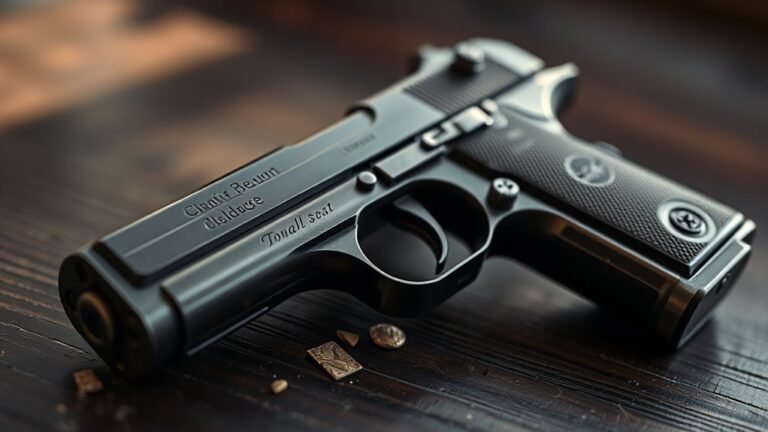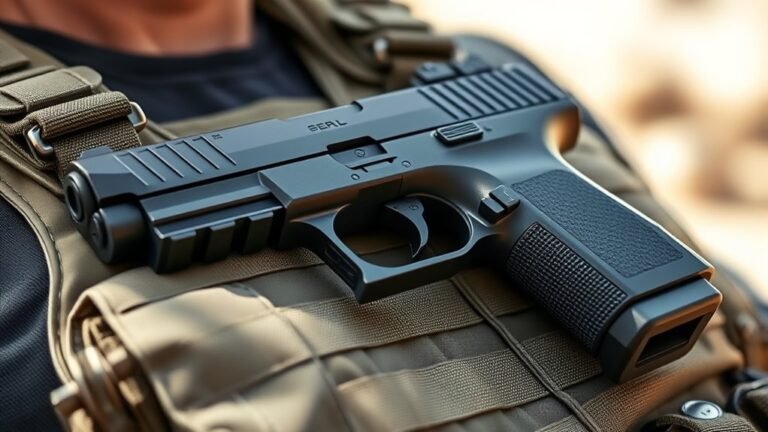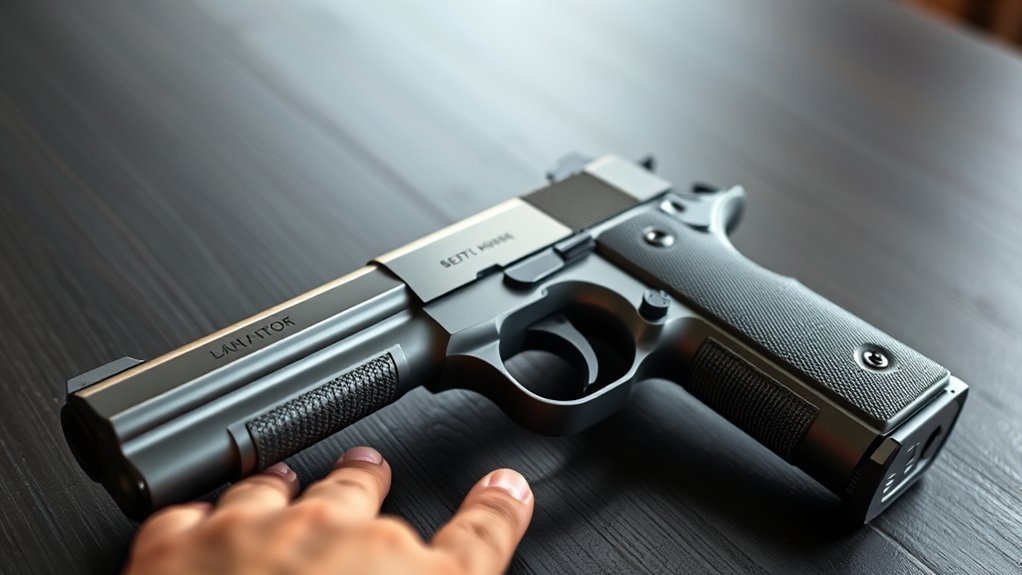
How to Identify What Is Considered a Full Size Pistol
You can identify a full-size pistol by looking for a barrel length over 4.5 inches and an overall length exceeding 7 inches. These pistols have taller frames—usually above 5.5 inches—to provide better stability and control.
They often hold 15-20 rounds, making them great for extended shooting sessions.
Plus, full-size pistols have a longer sight radius, which really helps with accuracy. While they might be less ideal for concealment because of their size, they excel in performance and reliability.
If you’re curious about how full-size pistols compare to compact and subcompact options, keep exploring. Understanding the differences will help you find what suits your needs best.
Key Takeaways
- Full-size pistols typically have a barrel length between 4.5 and 5.5 inches. Overall length of full-size pistols usually exceeds 7 inches.
- They feature a taller height, generally over 5.5 inches. Full-size pistols have larger grips and higher magazine capacities, often 15-20 rounds.
- These pistols prioritize stability, control, and accuracy over concealability. So, if you’re looking for something easy to handle and precise, full-size might be the way to go.
What Makes a Full-Size Pistol Different: Dimensions and Features
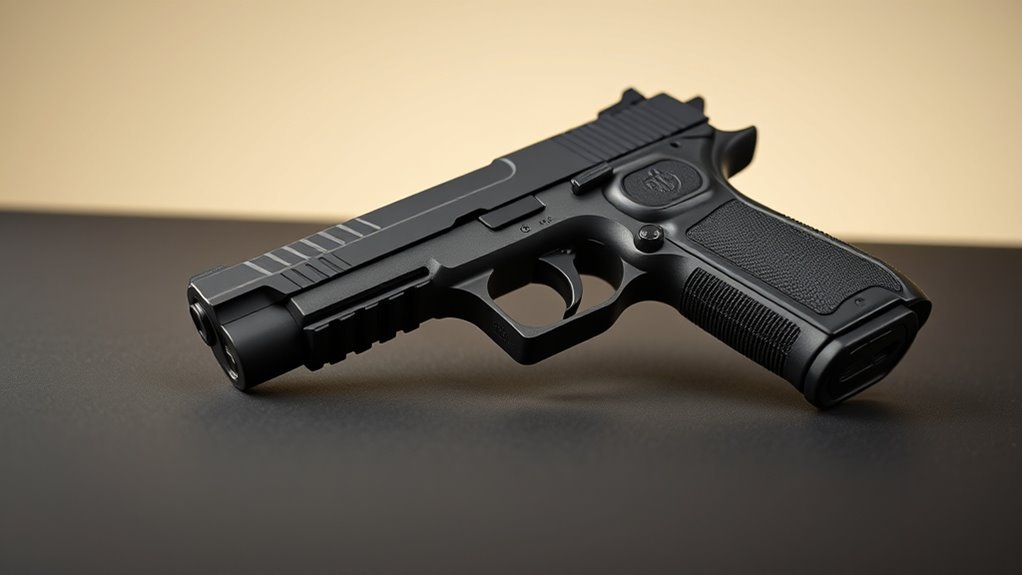
Although full-size pistols vary by model, they generally feature barrels between 4.5 and 5.5 inches and stand taller than 5.5 inches. When you handle a full-size pistol, you’ll notice its longer barrel length and overall length—usually exceeding 7 inches—contribute to a larger firearm size.
Full-size pistols typically have barrels over 4.5 inches and overall lengths surpassing 7 inches.
This increases the sight radius, helping you aim more accurately. The grip size and frame dimensions are also bigger, allowing for higher magazine capacity, often between 15 and 20 rounds.
These handgun features make a full-size pistol less ideal for concealability, but they offer stability and control. Models like the Glock 17 and SIG P226 exemplify these traits, balancing size and performance.
Understanding these dimensions and features helps you identify a true full-size pistol.
Comparing Full-Size, Compact, and Subcompact Pistols: Size, Capacity, and Concealability
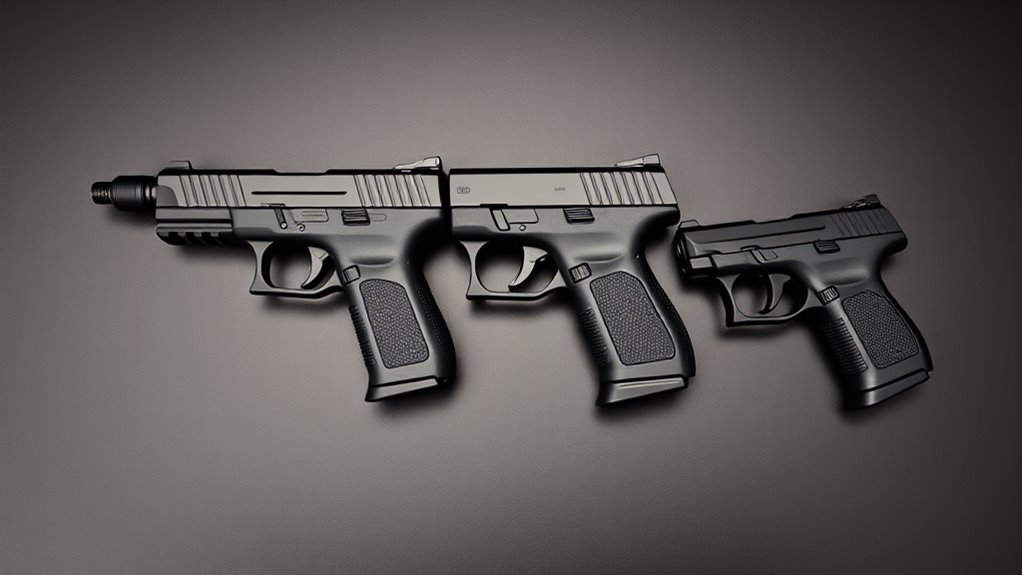
When choosing a pistol, understanding the differences between full-size, compact, and subcompact models helps you find the right balance of size, capacity, and concealability. Full-size pistols typically feature barrel lengths of 4.5 to 5.5 inches and handgun dimensions over 7 inches. They offer higher magazine capacity—often 15-20 rounds—and improved shooting accuracy.
Compact pistols, with barrel lengths around 3.5 to 4.5 inches, strike a middle ground. They balance concealability and firearm size without sacrificing too much capacity or safety.
Subcompact pistols prioritize concealability, with barrel lengths under 3.5 inches and overall dimensions below 6 inches. But, they usually carry fewer rounds, around 10-12.
Knowing these distinctions guarantees you select a firearm that fits your needs while maintaining firearm safety and effective handling. It’s all about finding what works best for you.
Frequently Asked Questions
What Qualifies as a Full-Size Pistol?
You qualify a full-size pistol by its barrel length around 4.5 to 5.5 inches, overall length exceeding 7 inches, height over 5.5 inches, and magazine capacity of 15 to 20 rounds or more.
What Makes a Gun Full-Size?
A gun’s full-size status comes from a longer barrel, bigger grip, and higher magazine capacity. You’ll notice it feels heavier, offers better control, and suits open carry or home defense rather than concealed carry.
Is the Glock 19 Considered Compact or Full-Size?
You might think the Glock 19’s trying to sneak into the full-size club, but nope—it’s compact. You’ll appreciate its smaller size for easy carry, not bulky enough to be a full-size pistol, sorry!
Is a Glock 21 a Full-Size Gun?
Yes, the Glock 21 is a full-size gun. You’ll appreciate its 4.6-inch barrel, full grip, and larger magazine capacity, making it ideal for open carry, home defense, and standard service use.
Conclusion
Now that you’ve explored the subtle distinctions that set full-size pistols apart, you’re better equipped to recognize their refined presence. These firearms offer a more substantial grip and enhanced capacity, subtly balancing power and control.
While they may not slip away as discreetly as their smaller counterparts, their commanding stature provides a reliable and confident experience. Understanding these nuances helps you appreciate the thoughtful design behind every full-size pistol.
Recognizing what is considered a full-size pistol means knowing they typically feature larger frames, longer barrels, and higher magazine capacities. These elements contribute to improved accuracy and handling, making them popular choices for home defense and professional use. So, when identifying a full-size pistol, look for that balance of size, power, and control that sets them apart from compact or subcompact models. This awareness makes it easier to select the right firearm for your needs and appreciate the craftsmanship involved.