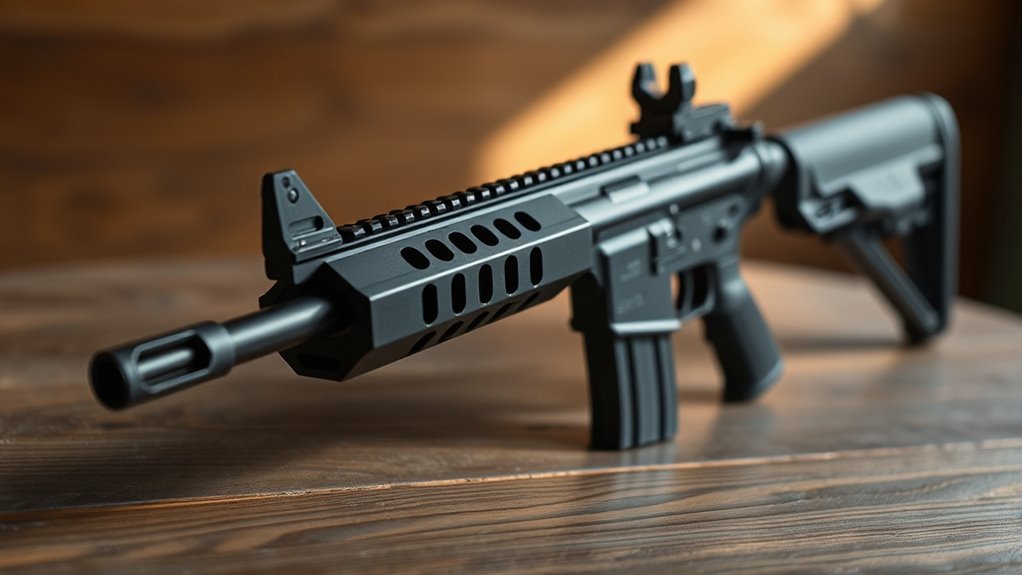
What Is a Short Barrel Rifle?
A short barrel rifle (SBR) is a firearm you own or use that has a barrel shorter than 16 inches or an overall length under 26 inches. These firearms are subject to specific regulations because of their compact size and potential uses.
The ATF regulates these strictly, requiring you to register the SBR, pay a $200 tax stamp, and get approval before buying or modifying one.
Owning an SBR can offer advantages like greater portability and easier silencer compatibility. But you have to follow federal and state laws carefully to stay compliant.
If you’re thinking about getting an SBR, it’s important to understand all the legal requirements and restrictions involved. Exploring further will reveal important compliance details that can help you avoid penalties and enjoy your firearm responsibly.
Definition and Legal Framework of Short Barrel Rifles
Although short barrel rifles (SBRs) might seem similar to standard rifles, they have specific legal definitions and regulations that you need to understand. The ATF defines an SBR as a rifle with a barrel length under 16 inches or an overall length shorter than 26 inches.
When measuring barrel length, you exclude muzzle devices, focusing from the muzzle to the chamber’s front. Overall length includes the entire firearm with stock or brace extended.
Under the NFA, SBRs require strict registration, a $200 tax stamp, and ATF approval for legal ownership. Failing to register or circumventing these firearm regulations can lead to severe federal penalties.
Knowing these details helps you comply fully with the law and avoid unintentional violations involving short barrel rifles. So, it’s important to be clear on these rules before you get involved with SBRs.
Ownership, Benefits, and Regulatory Considerations
Owning a short barrel rifle means maneuvering specific legal requirements, including registering the firearm with the ATF, paying a $200 tax stamp, and completing thorough paperwork and background checks.
SBR ownership offers benefits like portability, ease of concealment, and silencer compatibility. However, regulations vary by state, so you must understand local laws to maintain legality.
Modifying or constructing an SBR requires ATF approval, including submitting Form 1 and ensuring the serial number is intact. Below is a quick overview:
| Aspect | Details |
|---|---|
| Tax Stamp | $200 fee |
| Registration | Mandatory with ATF |
| Modification | Requires ATF Form 1 |
| Legal Risks | Severe penalties if unregistered |
Stay compliant to enjoy your short barrel firearm safely and legally.
Conclusion
When you hold a short barrel rifle, you feel its compact power—like a lightning bolt ready to strike with precision. Understanding the legal framework guarantees you navigate ownership responsibly, avoiding shadows of confusion.
Its benefits, from maneuverability to versatility, make it a unique tool in your hands. Just remember, with great power comes great responsibility, so respect the regulations and keep your craftsmanship sharp, just like the rifle you wield.
Owning a short barrel rifle means knowing the rules inside and out. These firearms offer impressive agility in tight spaces, making them ideal for various uses. But always stay informed about the laws to ensure your ownership stays legal and safe. Embrace the power, respect the regulations, and enjoy the unique advantages of your short barrel rifle responsibly.