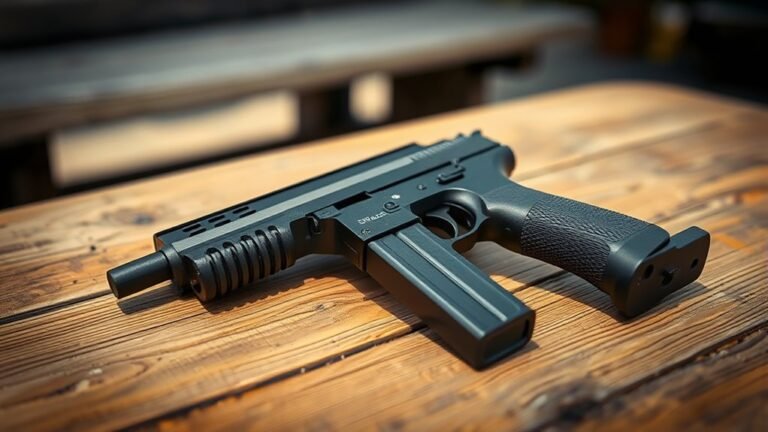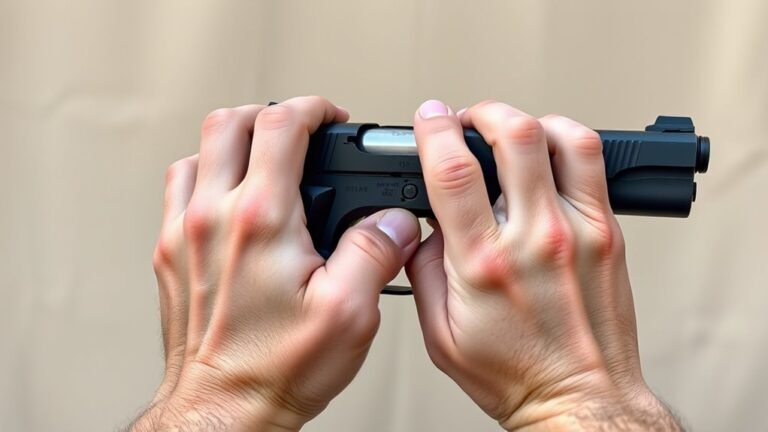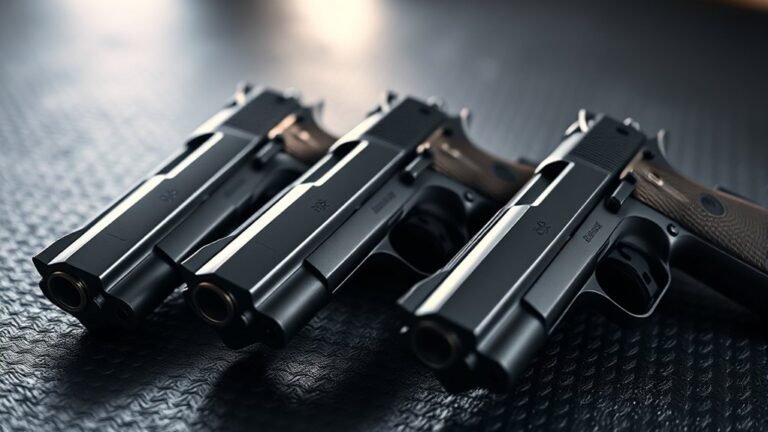
How Does a Pistol Compensator Work?
You control your pistol’s recoil and muzzle rise by attaching a compensator that redirects high-velocity gases upward.
This upward gas push creates a downward force on the muzzle, keeping your barrel more level and reducing muzzle flip. That means you can shoot more accurately and follow up faster.
While compensators boost stability, they can increase muzzle flash and maintenance needs. If you want to understand how these trade-offs affect your shooting experience, keep going for more details.
Mechanism Behind Pistol Compensators
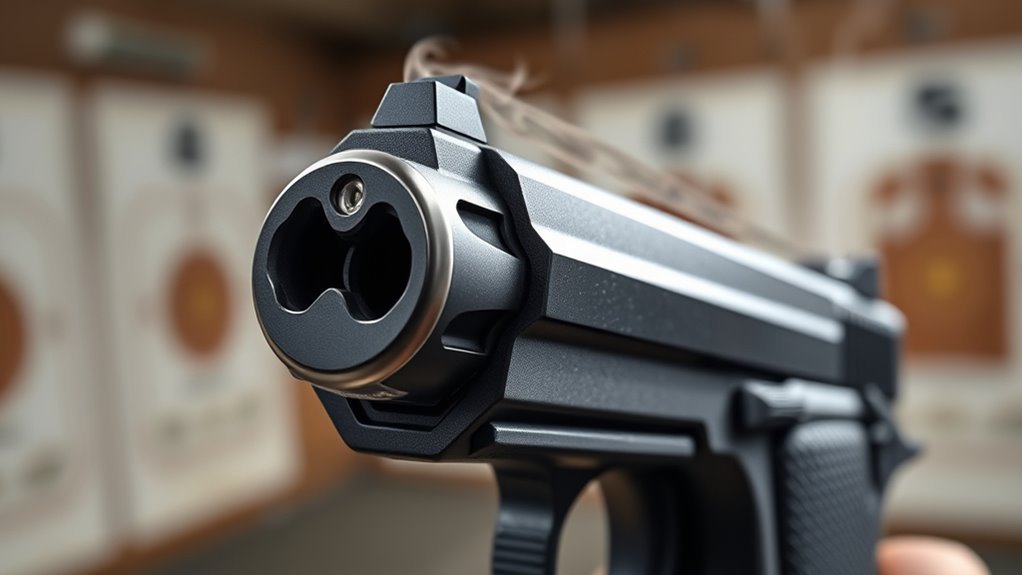
When you fire a pistol, the high-velocity gases exiting the barrel don’t just disappear—they get redirected by the compensator through upward vents. These ports channel the gases upward, creating a counterforce that pushes the muzzle down.
Compensators redirect high-speed gases through vents to counteract muzzle rise, pushing the barrel downward for better control.
This action reduces muzzle rise and minimizes muzzle flip, which are common effects of recoil. By redirecting gases upward, the compensator helps you maintain better control over your shot.
The design and placement of these ports play a pivotal role in how effectively the device manages recoil and stabilizes the muzzle. By reducing muzzle movement, you can keep the barrel more level.
This allows faster target reacquisition and improved shooting accuracy. Understanding this mechanism clarifies why compensators have become popular attachments on pistols.
Benefits and Drawbacks of Using a Pistol Compensator
Although pistol compensators enhance control by redirecting gases to reduce muzzle flip, they come with trade-offs you should consider. This muzzle device improves shooting control by lowering muzzle rise and felt recoil, allowing faster follow-up shots and boosting shooting performance.
However, the gases diverted upward cause a bright muzzle flash, which can reveal your position and impair night vision. Plus, compensators may slightly reduce muzzle velocity due to gas diversion. Don’t forget maintenance—carbon buildup on the front sight means more cleaning.
Here’s what to weigh:
- Significant recoil reduction and better follow-up shots
- Increased visibility from muzzle flash
- Slight drop in projectile energy
- Extra maintenance due to carbon buildup
Balancing these factors helps you decide if a compensator fits your needs.
Conclusion
Now that you know how a pistol compensator channels gases to curb climb and control recoil, you can confidently choose whether its benefits outweigh the bothersome bulk. It really comes down to finding a balance between better control and the added weight and noise.
Think about how a compensator can help you achieve quicker follow-up shots and improved accuracy. But keep in mind, it may add some extra noise and make your pistol a bit heavier.
Ultimately, deciding if a pistol compensator delivers the dynamic difference you desire depends on your shooting style and needs. Embrace enhanced efficiency and enjoy every expertly executed shot with a compensator crafted to calm chaos and create consistency. If you want to improve recoil management and shooting performance, a pistol compensator might be just the upgrade you need.