Do You Close One Eye When Shooting a Pistol for Better Aim?
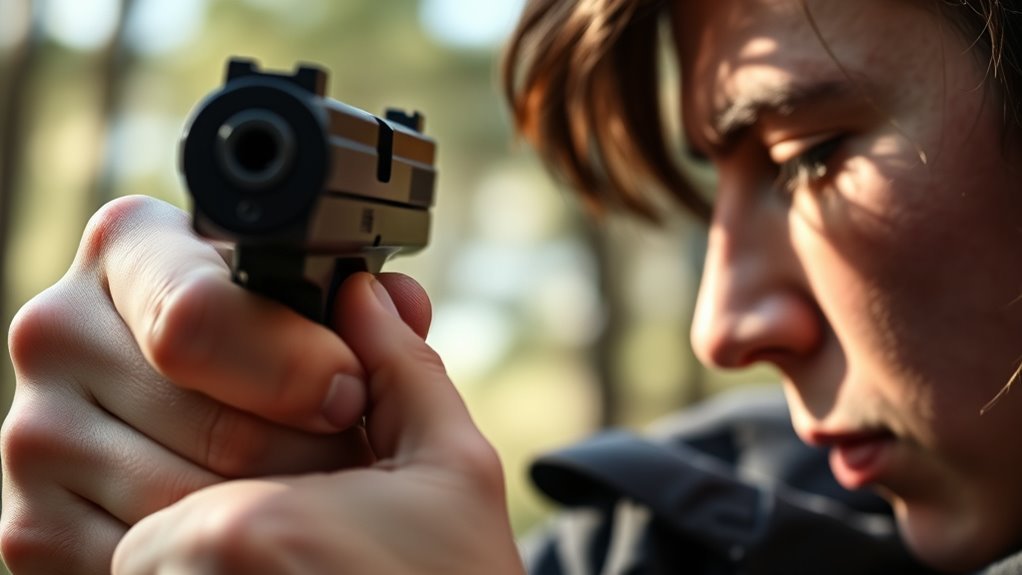
You might close one eye when shooting a pistol to sharpen your focus on the sights and reduce distractions, especially if you’re a beginner or managing eye dominance. This technique can help improve your aim by allowing you to concentrate better on the target without visual interference from your non-dominant eye.
However, closing one eye limits your peripheral vision and depth perception, which are crucial in faster or more dynamic shooting situations. These factors help you stay aware of your surroundings and react quickly when needed.
Training to shoot with both eyes open is beneficial because it maintains your situational awareness and reduces eye strain over time. If you want to boost your shooting skills, trying out both methods—shooting with one eye closed and with both eyes open—can really elevate your technique and adaptability.
Benefits and Drawbacks of Closing One Eye While Shooting
Although closing one eye can help you focus better on your pistol’s sights by eliminating distractions from your non-dominant eye, it also limits your peripheral vision. And peripheral vision is pretty important for situational awareness.
Closing one eye sharpens focus on sights but reduces peripheral vision, impacting situational awareness.
When you close one eye, you enhance your visual focus and can improve sight alignment and aim accuracy, especially if you’re just starting out and figuring out your eye dominance. But this method reduces your depth perception, which can make target acquisition slower and less natural over time.
Shooting with both eyes open helps keep your peripheral vision and situational awareness intact. This way, you can switch between targets more quickly.
Plus, relying on just one eye can cause eye strain if you’re shooting for a long time. So, balancing these pros and cons will help you decide when it’s better to close one eye or keep both open for safer, more effective shooting.
Techniques and Training for Shooting With Both Eyes Open
Closing one eye might feel natural at first, but training yourself to shoot with both eyes open can markedly improve your peripheral vision and situational awareness.
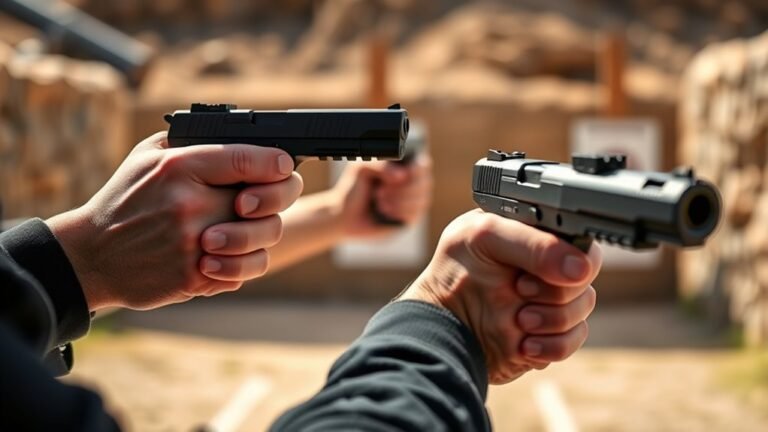
To master shooting with both eyes open, start with training exercises like dry fire drills and near-far focus drills that enhance eye coordination and visual processing. Position your head properly to minimize double images and improve visual focus, allowing your dominant eye to guide your aiming techniques more effectively.
These exercises help your brain process dual visual inputs, boosting shooting accuracy. Consistent practice gradually overcomes challenges such as visual overlap and discomfort.
Conclusion
So, you might think closing one eye makes your aim flawless, but ironically, it can actually narrow your vision and slow your reaction.
Keeping both eyes open might feel awkward at first, yet it gives you better depth perception and situational awareness.
So next time you instinctively shut an eye, remember: sometimes the “clearer” shot comes from seeing the whole picture, not just focusing on a single dot.
In shooting a pistol, aiming with both eyes open helps maintain a broader field of view. This improves your ability to track moving targets and respond quickly.
Ultimately, keeping both eyes open enhances your overall aim and shooting accuracy more than closing one eye. So for better aim and faster reaction times, try to train yourself to shoot with both eyes open.