How to Aim a Pistol in 3 Simple Steps
To aim a pistol accurately, it all starts with mastering just three simple steps. First, you want to establish a firm grip and a stable stance. Stand with your feet shoulder-width apart and keep your elbows slightly bent. This foundation helps you control the pistol better and stay steady.
Next up, it’s all about aligning your sights. Focus on the front sight, making sure it’s centered perfectly in the rear notch. Try to keep both eyes open for improved depth perception—it really makes a difference when you’re aiming.
Finally, the key to a good shot is smooth trigger control. Squeeze the trigger steadily without any jerking motions. Keep your sight picture steady through the follow-through. Nail these basics, and you’ll be on your way to consistent accuracy before you know it!
Establish a Proper Grip and Stance
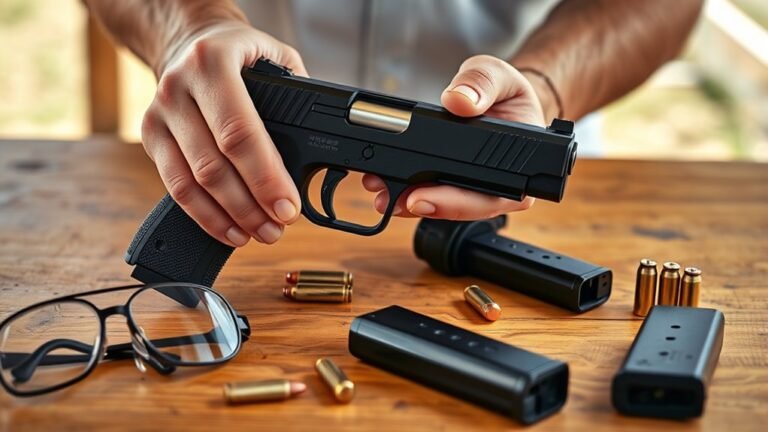
Before you take your shot, establishing a proper grip and stance is essential for accuracy and control. Start by gripping the pistol firmly with your dominant hand high on the back strap. Your support hand wraps around, making sure all fingers stay under the trigger guard except your trigger finger, which rests lightly on the trigger.
A firm, high grip with both hands ensures accuracy and control before every shot.
Position your feet shoulder-width apart to create a stable shooting stance. Keep your knees slightly bent and distribute your weight evenly to maintain balance and stability.
Your body position should be square to the target if you’re using an Isosceles stance. Or, you can turn slightly if you prefer the Weaver stance.
Keep your elbows slightly bent to absorb recoil and maintain control. This grip and stance setup supports natural movement, allowing quick, consistent shots every time.
Achieve Correct Sight Alignment and Focus
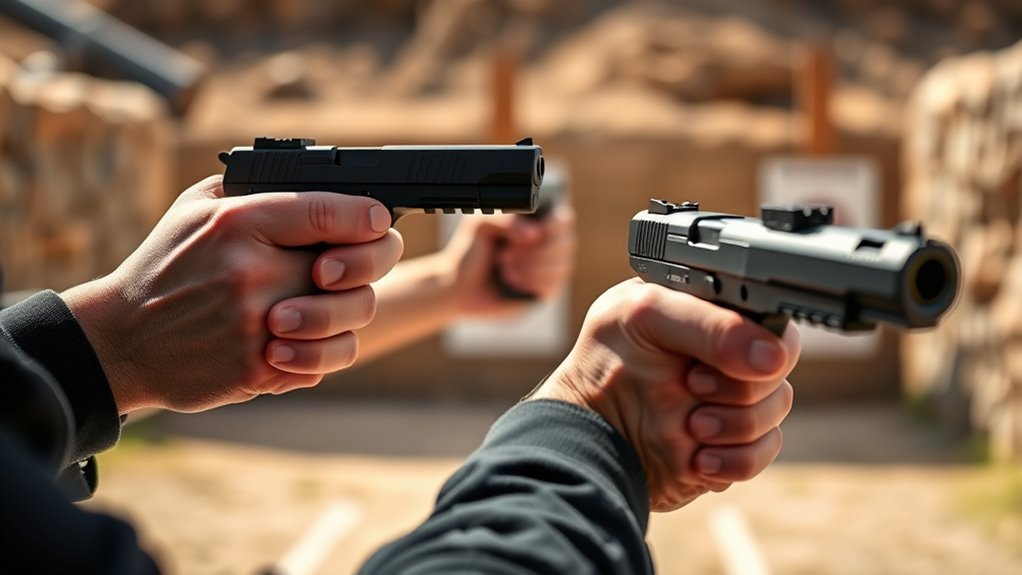
With your grip and stance set, turn your attention to aligning your sights correctly. Start by positioning the front sight evenly within the rear sight notch, making sure the top edges are level. This proper sight alignment forms the foundation of your square sight picture.
Focus your dominant eye sharply on the front sight while keeping the rear sight and target slightly blurry. Keeping both eyes open helps maintain a steady aim and enhances depth perception.
Your front sight should be centered and stable, ensuring you maintain a steady aim before firing. Remember, solid sight alignment combined with your proper grip and trigger control is key to accuracy.
Mastering this focus lets you confidently prepare for smooth trigger control and follow through. It’s all about building good habits step by step.
Apply Smooth Trigger Control and Follow Through
Although your sights are perfectly aligned, your shot won’t be accurate unless you apply smooth, steady trigger control. Start by maintaining grip stability and focus on the front sight as you execute a proper trigger squeeze.
Use a smooth trigger pull, applying consistent pressure without jerking or pausing. This ensures your sight alignment remains intact.
Avoid changing your grip during the trigger press to preserve aiming accuracy and shot stability. After the shot fires, practice follow through by holding the trigger back momentarily.
This helps stabilize your aim and prevents flinching. Keep your stance and sight picture steady to observe the shot’s impact and prepare for the next.
Mastering trigger control and follow through is essential for reliable, precise shooting every time.
Conclusion
By mastering your grip, stance, sight alignment, and trigger control, you’re not just aiming—you’re building muscle memory that turns theory into instinct. Some say aiming is all about natural talent, but the truth is anyone can improve with practice.
Remember, even the best shooters started shaky. So, keep practicing these simple steps, and soon aiming a pistol will feel less like a science experiment and more like second nature. With consistent effort, your ability to aim a pistol accurately will improve, making each shot more confident and precise.
In the end, aiming a pistol effectively comes down to dedication and repetition. Follow these three simple steps, and you’ll see real progress. It’s all about turning those fundamentals into muscle memory that helps you aim effortlessly every time.