Is “Assault Rifle” a Real Term?
Yes, the term “assault rifle” is real and historically rooted. It originated in World War II Germany with the StG 44, which was the first firearm to combine rifle accuracy with automatic fire.
This term specifically refers to military firearms capable of automatic or burst fire using intermediate cartridges.
Now, this is different from “assault weapon,” which is more of a civilian term. That one is based largely on the firearm’s appearance and the fact that it operates semi-automatically.
If you’re curious about how this difference plays into modern firearm discussions and laws, there’s definitely more to explore.
Historical Origins of the Term “Assault Rifle
Although you might have heard the term “assault rifle” used casually, its origins trace back to World War II Germany. The word “Sturmgewehr,” meaning “storm rifle,” was coined by Adolf Hitler to describe a revolutionary military firearm developed during this period.
This new infantry weapon, the StG 44, combined the accuracy of a rifle with the rapid fire capability of a submachine gun. The German StG 44 was the first widely recognized assault rifle, marking the origin of this firearm classification.
Its design addressed the need for a versatile weapon that balanced firepower and portability on the battlefield. Over time, the term “assault rifle” and its German roots found adoption in both military firearm terminology and civilian discussions, shaping modern understanding of this weapon type.
Distinguishing Assault Rifles From Assault Weapons
When you hear the terms “assault rifle” and “assault weapon,” it’s important to know they refer to different types of firearms. An assault rifle is a military rifle capable of automatic or burst fire, using intermediate cartridges—true automatic fire distinguishes it.
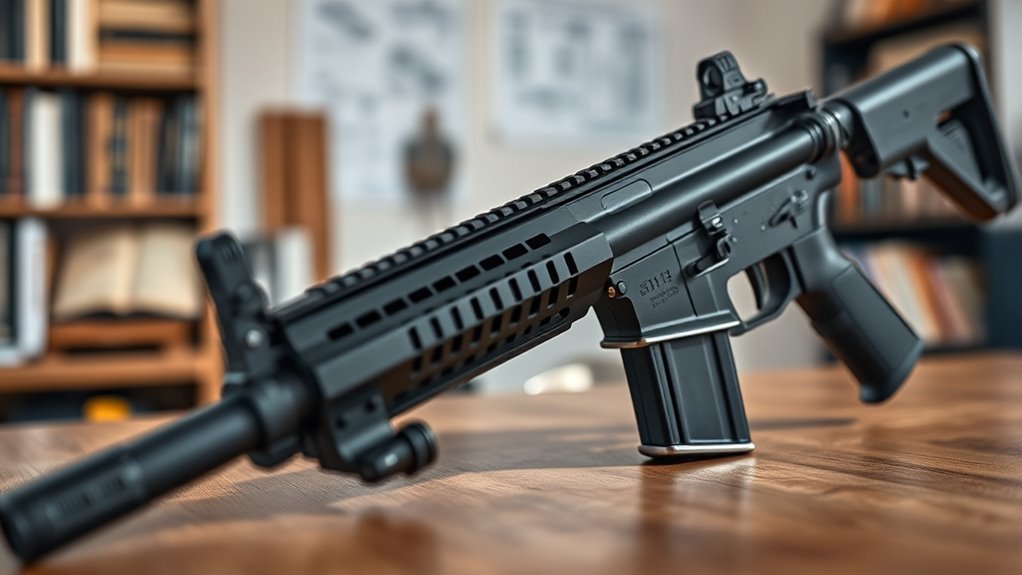
In contrast, assault weapons are civilian firearms, usually semi-automatic, defined by cosmetic features like pistol grips or detachable magazines rather than actual firearm capabilities. Legislation often labels semi-automatic guns as assault weapons based on appearance, not firing function.
Understanding this distinction in firearms terminology helps you avoid confusing military-grade assault rifles with civilian assault weapons. So, remember: assault rifles possess automatic fire, while assault weapons are semi-automatic with specific cosmetic features, reflecting a key difference in firearm capabilities and legal classification.
Conclusion
Now that you understand the historical roots of “assault rifle” and how it differs from “assault weapon,” you can see why the terms aren’t interchangeable.
Think of it like mixing up apples and apple pie—they’re related but not the same.
By knowing these distinctions, you’ll navigate conversations about firearms more clearly and avoid common misunderstandings that often cloud the debate.
Stay informed, and you’ll cut through confusion like a sharp knife through butter.
Understanding the real meaning of “assault rifle” is key to clear communication in any discussion about guns.
So next time you hear the term, you’ll know exactly what it means—and why it matters.
This knowledge helps you separate fact from fiction, making debates about firearms more accurate and meaningful.