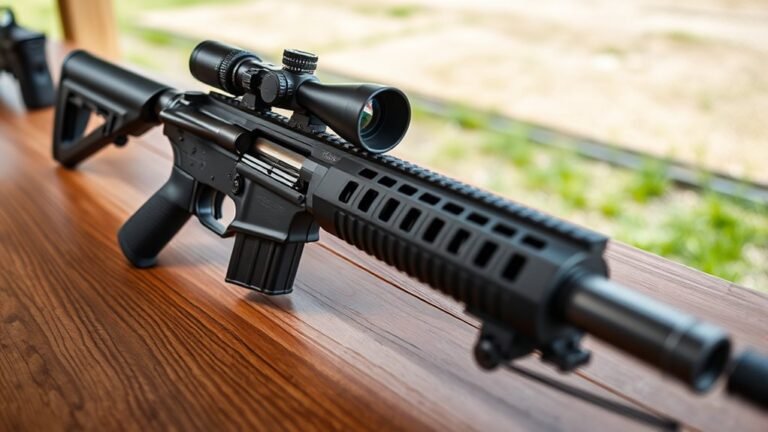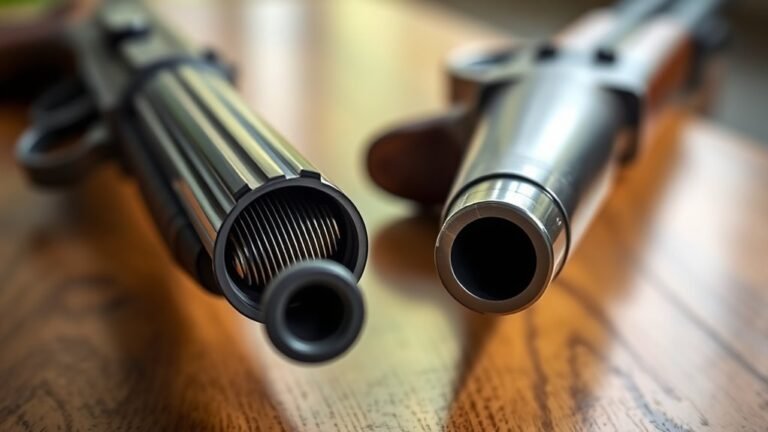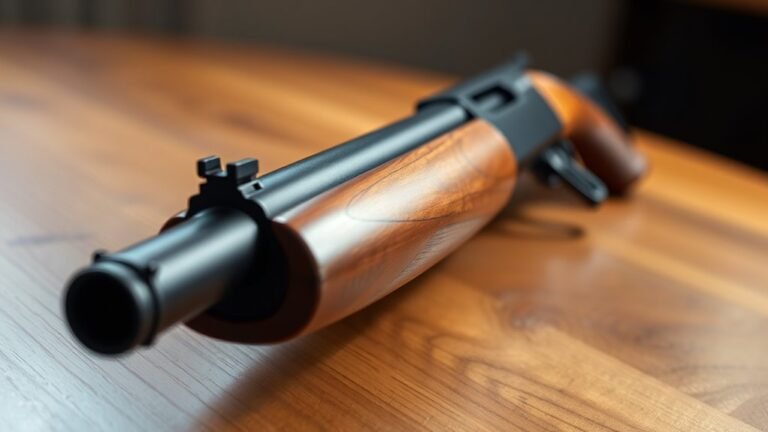
How to Measure Rifle Barrel Length in 10 Easy Steps
To measure your rifle’s barrel length accurately, first make sure it’s completely unloaded and safe. Safety always comes first when handling firearms.
Place the rifle securely on a stable surface, then close the bolt fully. This ensures you get a precise measurement without any movement.
Next, insert a clean, straight rod into the bore until it touches the bolt face. Mark the rod at the muzzle’s edge carefully.
Remove the rod gently and measure from the end to the mark with a ruler. It’s a simple step, but accuracy here is key.
Repeat the measurement a few times to confirm consistency. Don’t forget to record your results so you have a clear reference.
Following these easy steps will help you get an exact barrel length, which is crucial for maintenance, upgrades, or legal compliance.
Keep going for more precise techniques and handy tips!
Ensure the Rifle Is Unloaded and Safe
Before you begin measuring the rifle barrel length, make sure the rifle is completely unloaded and safe to handle. First, check the chamber carefully to confirm no round is present.
Always ensure the rifle is unloaded and safe by thoroughly checking the chamber before measuring the barrel length.
Remove any magazine or ammunition to guarantee the rifle stays unloaded throughout the process. Always keep the safety engaged to prevent accidental discharge.
Point the rifle in a safe direction, away from yourself and others, while inspecting and measuring. Double-check that the bolt is fully open or closed according to your measurement method.
Handling the firearm with care is vital to maintain safety. Taking these steps guarantees you won’t risk injury and that the rifle remains securely safe as you prepare to measure its barrel length accurately.
Position the Rifle Securely on a Stable Surface
Place your rifle on a firm, stable surface with non-slip padding to keep it from moving.
Make sure the barrel is aligned horizontally for an accurate measurement.
Keeping the rifle steady and level is key to getting consistent results.
Ensure Firm Support
When you secure your rifle firmly on a stable surface, you prevent any movement that could affect the accuracy of your barrel length measurement. Firm support ensures the rifle stays steady, giving you precise results with your measuring rod.
To keep things stable, try placing the rifle on a flat, solid surface. This helps avoid any wobbling that might throw off your measurement.
Before you position the firearm, always confirm it’s unloaded. Safety first!
Depending on your method, keep the action open or the bolt closed. This helps maintain the setup.
Hold the rifle steady with gentle pressure—don’t push too hard or let it shift.
When you place the measuring rod along the barrel, do it carefully so you don’t disturb the setup.
Use Non-Slip Padding
To keep your rifle steady during measurement, add non-slip padding beneath it on the stable surface you’ve chosen. Non-slip padding, like rubber mats or grip pads, prevents the rifle from sliding or shifting while you measure barrel length.
When you place the rifle, make sure it rests firmly on the padding without any pressure that might compress it unevenly. This keeps the rifle securely positioned and prevents movement that could affect your measurement accuracy.
Avoid applying force that might cause the rifle to tilt or slide. Confirm the rifle remains completely stationary throughout the process.
Align Barrel Horizontally
Before measuring barrel length, make sure you’ve positioned the rifle securely on a flat, stable surface with its barrel pointing straight ahead. Aligning the barrel horizontally is vital for an accurate measurement from the bolt face to the muzzle.
To ensure proper alignment, follow these steps:
- Place the rifle on a flat, stable surface with no tilt.
- Use a level or plumb line to check that the barrel is perfectly horizontal.
- Secure the rifle with clamps or a vise to prevent movement.
- Confirm the rifle is unloaded and the bolt is fully closed.
- Position the barrel parallel to the ground, avoiding any upward or downward tilt.
This setup guarantees a precise barrel length measurement, essential for practical application and consistent firearm performance.
Close the Bolt to the Fully Locked Position
Before measuring, make sure you close the bolt completely until it’s fully locked. Check that the firing pin is recessed and the bolt handle is securely engaged.
This guarantees your barrel length measurement is accurate and consistent every time. Taking these steps really helps avoid any errors. So, don’t skip them!
Confirm Bolt Fully Locked
Although it may seem simple, you must guarantee the bolt is fully closed and locked before measuring the barrel length. This ensures you get an accurate and consistent reading.
When you push the rod down the barrel, a fully locked bolt acts as a firm reference point, preventing errors caused by partial closure.
To confirm the bolt is fully locked:
- Check for any play or looseness in the bolt handle
- Ensure the bolt handle is completely rotated into the locked position
- Listen for a distinct click or feel the bolt snap into place
- Avoid measuring if the bolt feels loose or partially engaged
- Repeat the check if you reposition the rod down the barrel to verify accuracy
Confirming this step is critical for standardized and reliable barrel length measurements. It’s worth taking the extra moment to double-check.
Ensure Proper Bolt Engagement
When you close the bolt, make sure it fully engages with the receiver lugs to guarantee an accurate barrel length measurement. Always confirm the bolt is completely locked by checking that the bolt handle sits securely down, signaling proper engagement.
If the bolt isn’t fully closed, the barrel length reading can be off due to movement or misalignment. Use your hand to gently close and lock the bolt, ensuring it’s flush and stable against the receiver.
This not only prevents errors but also ensures consistent measurements across different rifles. Proper bolt engagement is essential for reliable, repeatable results, so never rush this step.
Taking the time to verify the bolt’s locked position helps you get the precise barrel length you need every time. It’s a small step that makes a big difference.
Choose the Correct Reference Point for Measurement
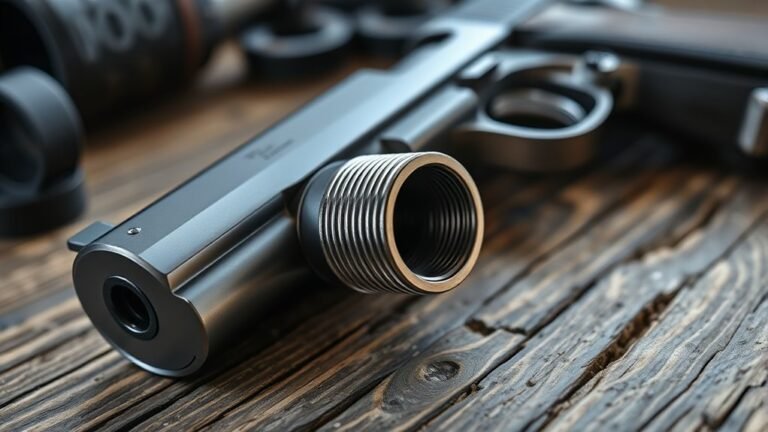
Since accurate barrel length measurements depend on a consistent starting point, you need to choose the correct reference carefully. The standard is to measure from the bolt face or breech face to the barrel’s end, including any muzzle device or threaded portion.
Being consistent with your reference guarantees accuracy and meaningful comparison. So, keep these tips in mind:
- Measure from the bolt face with the bolt fully closed.
- Ensure the measuring rod touches the bolt face securely.
- Include the threaded portion for legal or official specs.
- Mark the cleaning rod at the muzzle for precise length.
- Use the same reference point every time you measure.
Following these simple steps will help you get reliable and repeatable barrel length measurements each time.
Select an Appropriate Measuring Tool
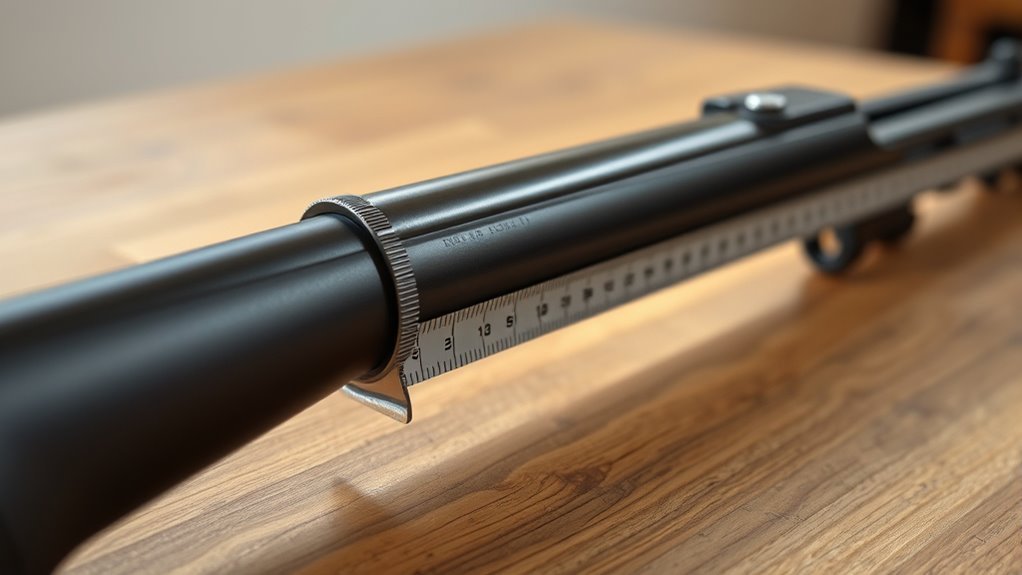
You’ll want to pick a reliable measuring tool like a steel ruler, tape measure, or calibrated rod with clear markings.
Make sure it’s long enough to cover the entire barrel length and has a straight edge to keep your measurement accurate.
Also, check that your tool is clean and free of debris before you start.
This way, you’ll get the most precise measurement possible without any hiccups.
Choosing the Right Tool
Although measuring a rifle barrel might seem straightforward, choosing the right tool is essential for accuracy. You want a tool that’s sturdy, easy to handle, and fits the specific measurement needs of your barrel.
Consider these options to ensure you get a precise reading:
- Use a straight measuring tape or flexible ruler with clear markings for general measurements.
- A steel or aluminum caliper works great for smaller barrels needing detailed accuracy.
- Choose tools with easy-to-read markings to prevent errors.
For internal barrel length, a bore gauge or marked cleaning rod helps measure from the chamber to the muzzle. Always pick a tool long enough to reach from the chamber or bolt face to the barrel’s end.
Selecting the right tool establishes the foundation for an accurate measurement. So, take your time choosing—it really makes a difference!
Tool Accuracy and Types
When measuring a rifle barrel, selecting a precise tool is essential to getting accurate results. You’ll want to use tools like steel calipers, digital calipers, or a graduated ruler with at least 1/16-inch or 1-millimeter increments. Digital calipers often provide the best precision.
Always check your tool for damage or wear before measuring, and align it straight along the barrel to avoid parallax errors. That way, you can trust your measurements.
| Tool Type | Precision Level | Recommended Use |
|---|---|---|
| Steel Caliper | High (±0.01 mm) | Ideal for precise measurements |
| Digital Caliper | Very High (±0.001 mm) | Best for accuracy |
| Graduated Ruler | Moderate (±1 mm) | Suitable for rough estimates |
Choose the tool that fits your accuracy needs and ensures reliable results. It’s all about matching the tool to what you need.
Insert the Measuring Tool Carefully Into the Barrel
Before measuring, insert a clean, straightened cleaning rod gently into the bore until it contacts the bolt or chamber face. This guarantees you have a true starting point inside the barrel.
As you do this, keep these tips in mind:
- Align the rod precisely with the barrel’s center to avoid skewed measurements.
- Push the rod slowly and steadily to prevent damage or misalignment.
- Avoid forcing the rod if you feel resistance; check for obstructions first.
- Keep the rod straight as you insert it to maintain accuracy.
- Once fully inserted, note the rod’s position carefully before withdrawing it.
Following these steps helps you get an accurate barrel length and prevents errors caused by improper insertion. It’s a simple way to make sure your measurement is spot on!
Mark the Measuring Tool at the Muzzle End
After you’ve gently inserted the measuring rod into the barrel and made certain it contacts the chamber face, the next step is to mark the rod at the muzzle end. Take a piece of tape or use a marker to precisely mark where the rod aligns with the muzzle’s outer edge.
This mark represents the exact point where the barrel ends, ensuring you capture the full barrel length. Be careful to keep the rod steady as you do this, so the mark is accurate and doesn’t shift.
This step is essential because any misalignment will throw off your final measurement. Once marked, you’ll have a clear reference point on the rod that corresponds exactly to the muzzle’s position on the barrel.
Remove the Measuring Tool and Measure the Marked Length
Once you’ve marked the muzzle end on the measuring rod, carefully pull it out of the barrel. Keep it straight and aligned to avoid disturbing the mark.
As you remove the tool, make sure the mark remains visible and intact. Once outside, confirm the mark is clear before measuring.
Keep the rod aligned with the barrel’s centerline during removal and avoid shifting or smudging the marked point.
Check the mark’s visibility immediately after withdrawal. Use a ruler or tape measure to measure from the rod’s end to the marked spot.
Finally, record this measurement accurately as your barrel length. Following these steps ensures your barrel length measurement is precise and reliable every time you measure.
Repeat the Measurement for Accuracy
To make certain your barrel length measurement is accurate, you should repeat the process several times using the same method. Each time, verify your cleaning rod or measuring tool is straight and firmly positioned.
Keep the firearm in the same position and measure from the bolt face to the muzzle consistently. Perform these measurements under identical conditions to improve reliability.
After each measurement, record your results carefully and compare them to spot any discrepancies. This practice helps confirm that your measurements aren’t influenced by tool misalignment or inconsistent placement.
Record and Verify the Barrel Length Measurement
Repeating your measurement builds confidence, but you still need to carefully record and verify your results. This step guarantees your barrel length is accurately documented and can be referenced later without confusion.
To do this right, follow these key points:
- Always note the exact measurement method used, like bolt face to muzzle or including threads.
- Double-check the measuring rod’s placement, making sure it stays straight and secure.
- Clearly document the contact points, such as the bolt face or barrel end.
- Use the same technique consistently across all firearms for reliable comparisons.
- Record the measurement in a log with the date, firearm model, and method.
Doing all this might seem like extra work, but it really helps keep things clear and accurate down the line.
Conclusion
Now that you’ve mastered measuring your rifle barrel like a pro, you could probably do it blindfolded—while juggling flaming torches! With your steady hands and sharp eye, no barrel length will ever escape your precise measurement.
Remember, accuracy isn’t just important—it’s everything. So take your time, double-check those numbers, and soon you’ll measure barrels so perfectly, even the rifle itself will be impressed by your skills!
Measuring your rifle barrel length accurately is crucial for performance and safety. Whether you’re a hunter, shooter, or gunsmith, knowing how to measure the barrel properly ensures your rifle functions as intended.
So keep practicing these steps, and you’ll become confident in measuring rifle barrel length every time. Consistency and precision are key to mastering this skill, making your shooting experience better and more reliable.